By Mark Ellis —
Hollywood lost one of its most endearing and original stars with the passing of Diane Keaton on October 11, at her home in Los Angeles.
The Oscar-winning actress was known for her quirky charm, memorable roles, and transparently vulnerable personality. While she battled bulimia in her youth and skin cancer in later years, her family stated the cause of death to be bacterial pneumonia.
Born Diane Hall in 1946, Keaton rose to fame in the 1970s with noteworthy performances that blended comedy, drama, and personal reflection. Her portrayal of the title character in Woody Allen’s Annie Hall (1977) earned her an Academy Award for Best Actress, capturing the hearts of audiences with her signature wardrobe and dizzy charms.
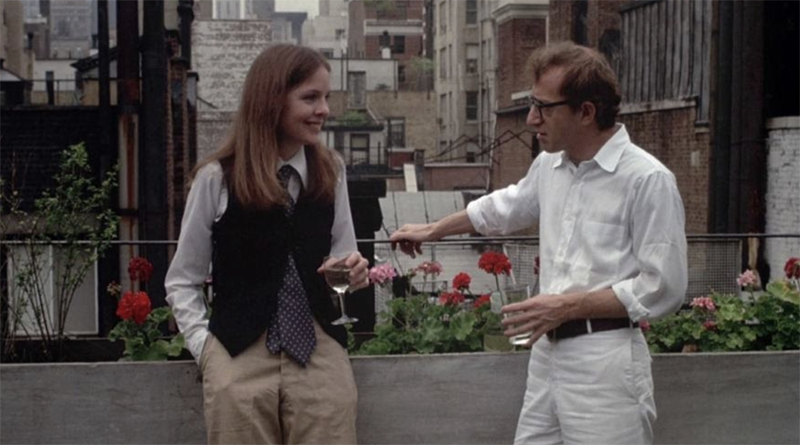
Watching the film in Sweden, I realized I was one of the few in the theater guffawing loudly, because the humor was so strongly attached to a moment in American culture in the late 70s that couldn’t be completely grasped overseas.
Raised in a Christian home—her mother a Free Methodist and her father an Irish Catholic, as she shared in her personal memoir Then Again—Keaton recalled being “pretty religious” as a child, memorizing Bible verses and attending church and Vacation Bible School in 1950s Los Angeles.
She described a special moment as a child when God touched her heart. She wrote: “I was seven when I walked up the stairs at Vacation Bible School, repeating John 3:16 to myself: ‘For God so loved the world that he gave his only begotten Son, that whosoever believeth in him should not perish, but have everlasting life.’
“As I said those words, something happened. My little-child heart felt full, like it was loved for the first time. I didn’t know what it was then, but now I think it was God’s love touching me.”
Her description matches what many would describe as being born again – even if she didn’t completely understand what happened to her as a child.
Sadly, she drifted toward agnosticism in her 20s, as she told The Guardian in a 2011 interview: “We went to church, and I memorized verses like John 3:16. But Jesus? I could never quite get him. I got the idea of God, a big presence, but the Jesus part—the Son, the cross—it felt too complicated, too much like a story I couldn’t fully buy into. By my 20s, I was pretty much done with it all, leaning agnostic.”
Her 1987 film Heaven, a lighthearted yet poignant exploration of the afterlife, reflected a lingering curiosity about eternity. “I get the need for something more,” she said in a 1996 Vanity Fair profile, hinting at her openness, though she never publicly reaffirmed her Christian faith in later years.
Despite her agnostic leanings, some friends, cited in a 2025 People magazine tribute, suggested Keaton privately acknowledged a Creator in her later years, particularly after her skin cancer battles, which she discussed openly as an advocate for prevention (Vogue, 2019).
In her film career, she brought depth to iconic roles in The Godfather trilogy as Kay Adams-Corleone, navigated romantic complexities in Reds (1981), and later delighted in hits like The First Wives Club (1996) and Something’s Gotta Give (2003).
Keaton had high-profile relationships with Woody Allen, Warren Beatty, and Al Pacino. She never married, adopted two children, Dexter and Duke, in her 50s, embracing motherhood with the same enthusiasm she brought to her work.
Diane Keaton’s legacy extends far beyond the silver screen. She reminded her many fans to embrace their quirks, laugh at life’s incongruities, and pursue a life marked by creative expression.
To know more about a personal relationship with God, go here