By Mark Ellis –
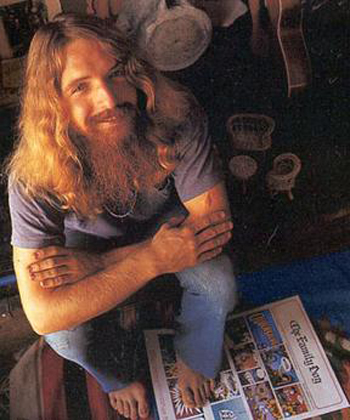
His art has a cult-like following among surfers of a certain vintage, including myself, who kept a copy of Griffin’s comic book Tales from the Tube, published in 1974. Griffin’s artistic vision was at the forefront of Surf-Culture, Psychedelic-Culture, and the Jesus Movement, leaving an indelible mark on each one in stunning succession.
In the words of art critic Doug Harvey, “Griffin’s role was to act as an intermediary between the experiential and symbolic realms, translating and codifying the transcendent weightlessness and timeless immediacy of the Green Room, the ego-shredding electricity of LSD, and the redemptive living waters of Christ’s presence into pictorial equivalents – as roadmaps for the novice and reminders for the initiated.”¹
Growing up in Palos Verdes, California, his engineer father – who also happened to be an amateur archaeologist – took the family throughout the southwestern US, where Griffin became enamored with Native American imagery and artifacts, which later influenced his work.
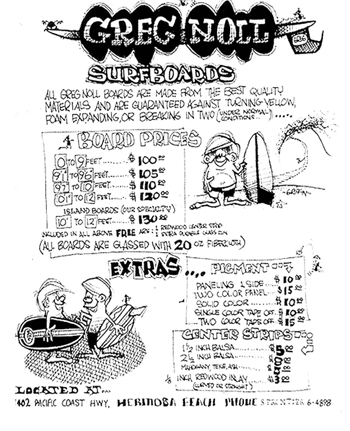
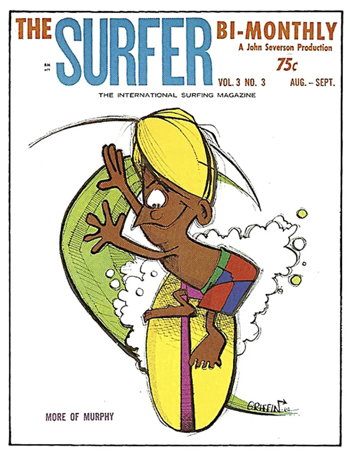
At 14 he developed a passion for surfing, and his cartoon-like doodling created a character named Murphy, who found his way into primitively drawn ads for Greg Noll’s surf shop in Hermosa Beach, and on the cover of Surfer magazine in 1962, after he met the magazine’s publisher, John Severson.
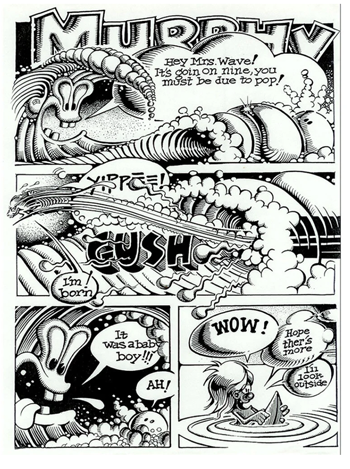
Still in his teens, the comic strip about Murphy’s adventures became a regular feature in Surfer.
Hitchhiking one day from LA to San Francisco, the driver of the vehicle who picked up Griffin lost control, and the young artist flew from the car. He was in a coma for several weeks and injured his face, which caused him to don a patch for a time to cover a damaged and lidless left eye.
He awakened from his coma as someone read the Twenty-third Psalm. It could not have
been a coincidence, that the words of life flowing from David’s pen brought physical awakening to a young man briefly entangled with death.
During the recuperation at his parents’ home, he refined his graphic techniques and decided he wanted to attend art school.
He only lasted a year at Chouinard Art Institute (now CalArts) in LA, due to their emphasis on Abstract Expressionism, but he developed friendships that influenced his pathway to global fame as one of the inventors of the psychedelic rock poster and underground comix.
A Bohemian art-gang at the school formed a jugband called the Jook Savages, which Griffin joined, playing the one-string zither. They played music at one of the first of Ken Kesey’s electric-Kool-Aid acid tests, held in LA at a warehouse four months after the Watts riots. Participants consumed LSD from a barrel filled with Kool-Aid, hoping to experience heightened consciousness and creativity, while strobe lights flashed on surfaces adorned with fluorescent paint, avantgarde slides were projected, and the Jook Savages played.
After the Savages jammed that night, they were followed by The Warlocks, who soon became known as the Grateful Dead.
Griffin met his future wife, Ida Pfefferle, at the school. “I was 19, and he was 20 years old when we met, and we had a lot in common,” she told God Reports. “We both loved the ocean, and we both collected comic books, and we used to go to record shops and look at records. He was drawing cartoons for Surfer Magazine.”
One thing led to another. “I got pregnant, and we weren’t going to get married, so I ended up going back up to San Francisco.”
Ida says that Rick’s parents were not religious. “I think he did go to a youth group when he was a teenager a few times. When I first dated Rick at Christmas, and I just met his parents, and I asked them if they were going to go to church, because I was raised in the Episcopal Church, and his mother said, ‘we don’t talk about that.’ And she was kind of rude. I was surprised. Apparently, her mother (Rick’s grandmother) was Catholic and gave all her money to the Catholic Church.
“I really didn’t quite understand Rick’s parents that much. They were pretty private people, and they were very overprotective of Rick growing up.”
After the birth of their first child, Flaven, Ida went to meet Rick in San Blas, Mexico, where he had traveled on an extended surf expedition. “We were down there for a couple months, and he bought this postcard. It was a picture of Jesus, and when you moved the postcard, Jesus’ eyes would open and close. Later on, he made a poster of it,” she said.
“He kept getting images of Jesus that were seeds being planted,” Ida noted.
The surf trip also involved psychedelic exploration. “Rick consumed massive amounts of LSD,” says Gordon McClelland, a close friend, fellow artist, and business partner of Rick’s. According to McClelland, Griffin’s interest in Native American cultures led to a fascination with indigenous people in Mexico who had been using psilocybin mushrooms for hundreds of years, such as the Mazatec, Mixtec, and Zapotec people. The mushrooms were consumed in ceremonies for divination, healing, and communication with the spirit world. Peyote – Mescaline cactus – was also seen as a mediator between humans and the gods.
“Almost everyone I knew who took LSD reported that they saw Jesus,” McClelland said.
After the couple’s return to California in 1966, they moved to San Francisco’s Haight Ashbury with other members of the Jook Savages at a propitious moment. “Rick started doing posters for the dances that they had up there with bands like the Grateful Dead and Jefferson Airplane,” Ida recalled.
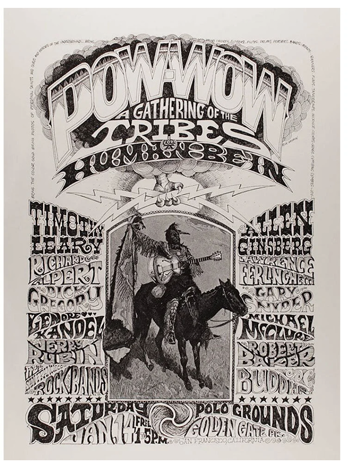
Griffin’s poster design for the Jook Savage Art Show (1966) gained notice and led to him designing a poster for an event held in Golden Gate Park known as the “Pow-Wow: A Gathering of the Tribes for a Human Be-in,” which brought together people from the Beat Movement and the burgeoning hippie community. Some 20,000 congregated on the polo field to hear speakers like Allen Ginsberg, Timothy Leary, and Jerry Rubin. Music was supplied by The Grateful Dead, Jefferson Airplane, Quicksilver Messenger Service, and Big Brother and the Holding Company.
“When we ended up living in San Francisco, a lot of our friends were learning about the Eastern religions, metaphysics. Both of us got interested in metaphysics and learning about different things spiritually, which was happening with a lot of our friends. We were smoking pot and taking LSD, which was a spiritual awakening for a lot of people,” Ida recalled.
Living next door to the Griffins were other poster artists, including Stanley Mouse and Alton Kelley. They became part of a group known as The Big Five of the San Francisco psychedelic poster movement.
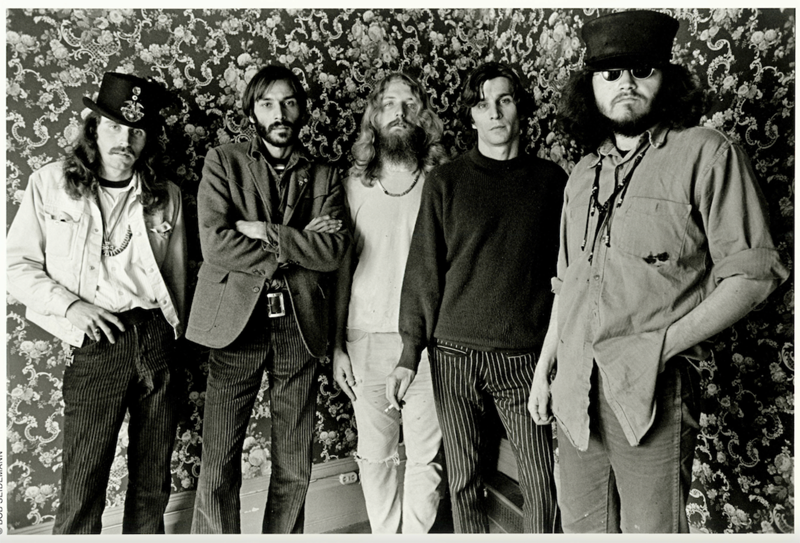
“It was during the Vietnam War,” Ida continued, “and the protests were going on about civil rights and stopping the war, although Rick and I weren’t really into any kind of political activism at that time. The Beatles and the Rolling Stones were getting popular, and we were just buying records and listening to music, and Rick was doing his artwork with the posters, and then started doing album covers.”
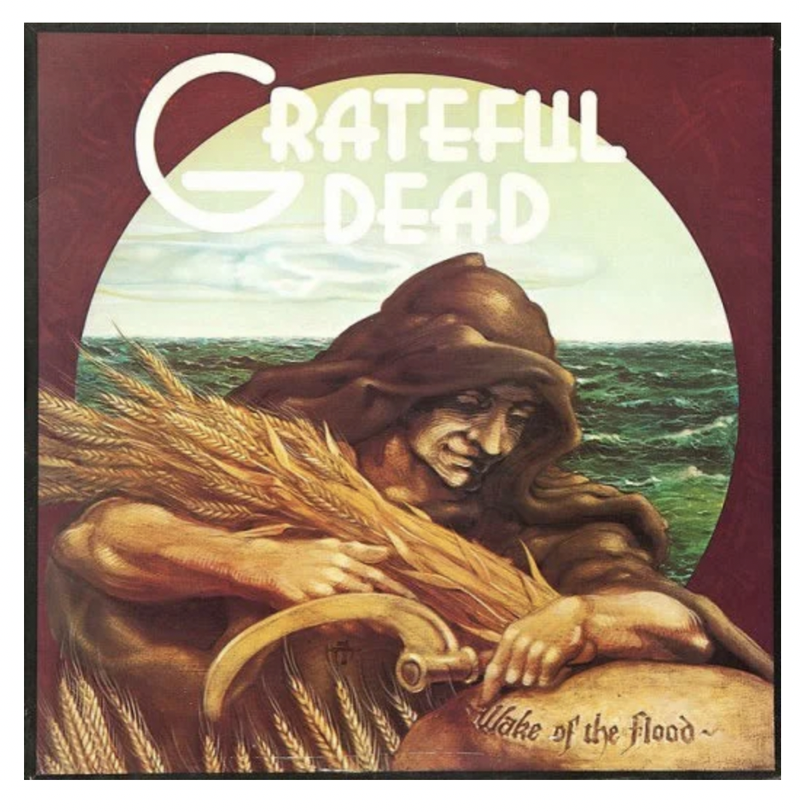
Griffin’s designs were in demand, which led to many posters for music promoter Bill Graham, along with an album cover for the Grateful Dead and other groups, and the original masthead for Rolling Stone magazine.
As the utopian dreams of the hippie movement began to fade, Rick and Ida retreated to Valentine, Texas, living in a water tower on the property of artist friend Boyd Elder.
They returned to California after John Severson asked Rick to create a poster for the surf film Pacific Vibrations. “So Rick did the movie poster, and we ended up moving to San Clemente, and we had our two daughters, We hadn’t been there very long, probably, about six or seven months, and Rick had been working on an art project, a booklet called Man from Utopia.
“He had gone up to San Francisco to get it printed, and from there, he ended up going to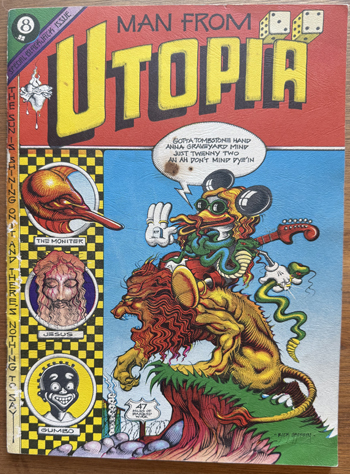 Mendocino, and that’s where he ran into his old friend, Paul Johnson, who was a musician in a surf band when he was in high school.”
Johnson had recently been saved in an unorthodox way. “I picked up a hitchhiker who was going to a Christian commune in Eureka, so I ended up spending the night at the commune and woke up born again,” Johnson told God Reports. “That was right at the very initial explosion of the Jesus Movement.” (mid-1970)
“I invited the people from the commune in Eureka to come down to Mendocino and do a revival,” Johnson continued. “A bunch of people in Mendocino got saved, including at the commune known as Sabine’s Land (Later known as The Lord’s Land, now a YWAM base).
“That’s where Rick got saved. He came up to visit and I referred him there. He had other friends there as well.” Johnson believes Griffin was saved in late 1970 or early 1971.
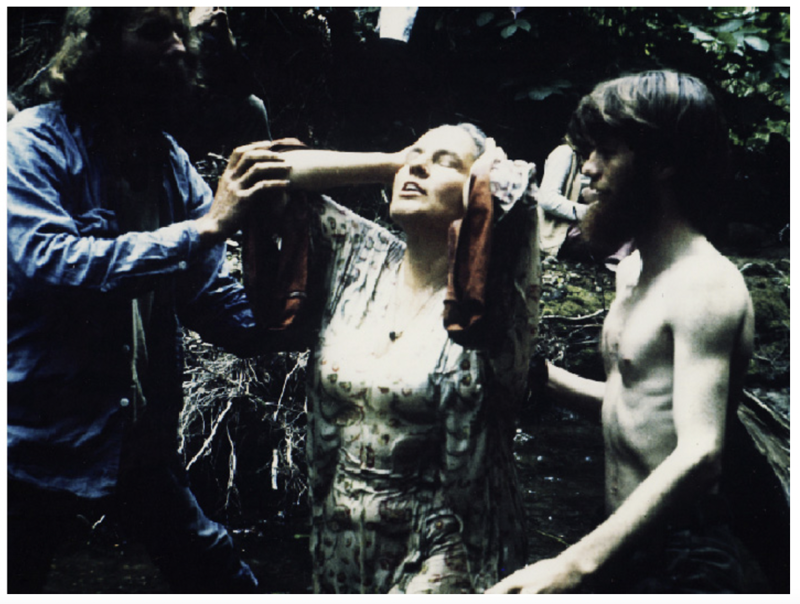
Before Griffin visited the commune, he and Johnson had a lengthy conversation, in which Johnson shared about his newfound faith. “He had a lot of questions. It seemed like he was searching,” Johnson said.
When Griffin returned from the commune, he was a new creature in Christ. “We were praising the Lord and sharing; we were stoked at being Christians,” Johnson remembered. “We acknowledged the fact that we had been looking for God and truth in the psychedelic movement, and God had saved us out of that.”
Johnson confirmed that he and Griffin had consumed prodigious amounts of LSD in their quest to find meaning and creative expression. “Jesus had quite a harvest from the drug scene in Mendocino,” Johnson observed. While Johnson didn’t see Jesus while taking hallucinogens, he believes Jesus intervened in his LSD experiences.
They had ridden the same long wave together, from surf culture to psychedelic culture, and into Jesus culture. “We were sharing notes all the way because we mutually regarded our participation in those movements as significant developments in our life as artists and musicians.”
Ida remembers Rick describing his conversion as powerful on many levels. “He had what they call a ‘lightning experience,’ where he was really struck hard and crying. It was a big, huge revelation for Rick to learn about Jesus…highly emotional.”
“I asked his living resurrected spirit to come into my life,” Rick later told an interviewer.
God’s sense of timing for the unmarried couple was perfect, because while Rick was
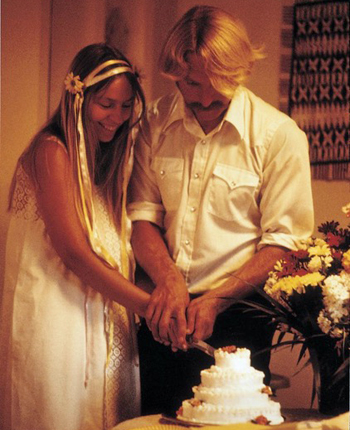
hundreds of miles away in Mendocino, Ida found Jesus in Costa Mesa, California. “I got saved through Lonnie Frisbee when he was preaching at Calvary Chapel, while Rick was gone, and so when he came back home, we both ended up going to a Baptist church in San Clemente and got baptized, and then a while later we got married by the Baptist pastor.”
Griffin’s new artistic identity as a born-again Christian was “disruptive” in the words of art critic Doug Harvey. “Griffin’s Born-Again work was marked by a distinct shift in subject matter, particularly in the first five years when much of his activities had a proselytizing tone. There was still a rich vein of spiritual symbolism, but it was focused on Christianity, and most of what might be taken as occult references disappeared.” ²
In 1976, Rick and Gordon McClelland traveled to England for a solo art exhibition held at the Roundhouse in London, a former Victorian train engine shed/turntable repurposed in the 1960s as a cultural center that became a focal point for London’s underground music and arts scene, hosting psychedelic, rock and avant-garde events.
“When we got there, we were staggered,” McClelland told God Reports. “There were thousands of people, and we’re like, ‘What the heck is happening?’ Wow — I had no idea how famous he was. Then I realized, he did a record album cover for the Grateful Dead, and they sold millions of them, and they go everywhere in the world. So, everybody’s got a record cover of (his) art. They all knew who he was.”
While they were in London, Griffin had several interviews with the BBC. “It must have been really exciting to hang out with the Grateful Dead and Jimi Hendrix,” the interviewer said, according to McClelland.
“Well, that was then, and now is now,” Rick replied. “And you know what, you need to be thinking about Jesus, that’s what you need to be thinking about, not Jimi Hendrix and Jerry Garcia.”
McClelland – who had only recently been born again himself while taking a shower on Easter morning — was blown away by Rick’s boldness. “Every time there was an interview, they got sideswiped. Rick was, all of a sudden, he’s ambushing them, he’s just giving them a testimony of Christ.
“He was very evangelical. I’m talking about seriously evangelical.”
One Sunday Griffin and McClelland decided to visit a London church. “Every corner has a beautiful, big church. So we just walked around and we went into this monster church. And, there’s maybe 20 people sitting in pews in the front, and the whole rest of the church is empty. It could have held a thousand or more.
“Rick and I were sitting one row behind all these people. I don’t think there was anybody under 50-60 years old in there. The pastor started his sermon…and I was nodding off, barely staying awake.”
“All of a sudden, Rick stood up. He said, ‘Hey, I came in here to hear about Jesus, and you’re talking about toasters and irons. Let’s talk about Jesus. Let’s get down to this. Let’s talk about what’s going on here with the Lord,” Griffin declared, before he sat down.
The congregants had turned around and were staring. “We’ve got long hair. We looked kind of freaky. I was really kind of shook up a bit. Everybody who was sitting there must have been shook up. And the pastor was like, ‘What the heck?’ But the (pastor) kicked in, and he actually didn’t do a bad job.”
The following year, Griffin was pulled into Calvary Chapel’s orbit. An idea had been percolating within the leaders at the church about illustrating the gospel of John, with a paraphrase of Scripture by Pastor Chuck. Chuck Fromm, Pastor Chuck’s son-in-law (soon to lead Maranatha Music) approached Griffin about taking on the assignment.
Before he could say yes, he had to deal with some practical issues. “At that moment in time, his car was broken down and the landlord had asked him to move out of the house he was renting in San Clemente,” McClelland wrote in a bio that became part of the completed project. “(Chuck Fromm) arranged for Rick and his family to move into an apartment in Santa Ana, across from Calvary Chapel. He also arranged to get them a new car. In addition, Fromm located studio space for Rick and arranged for him to receive a regular paycheck. This was truly a blessing for Rick and his family.”
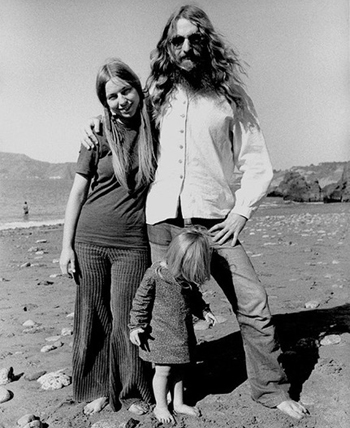
The family included Ida, their two daughters Flaven and Adelia, and two more children, Miles and Katie, born while Rick was working on illustrations for The Gospel of John.
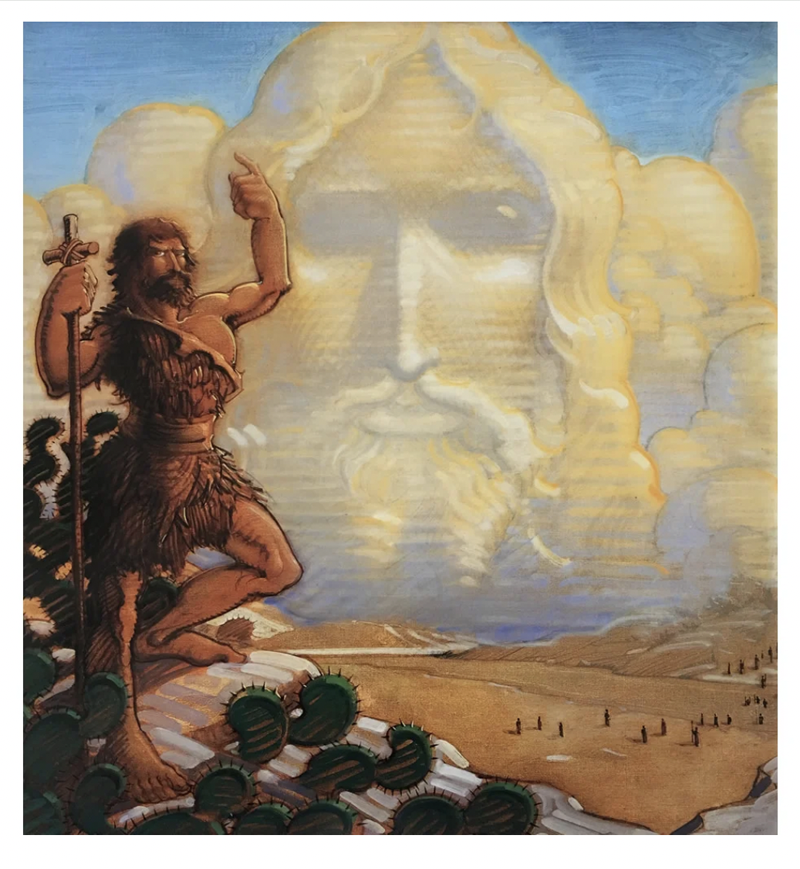
Art critic Doug Harvey recognized the importance of the completed project. It is “the most significant summation of Griffin’s faith-based artistic production and the magnum opus of his exploration of illustrative painting,” he wrote.³
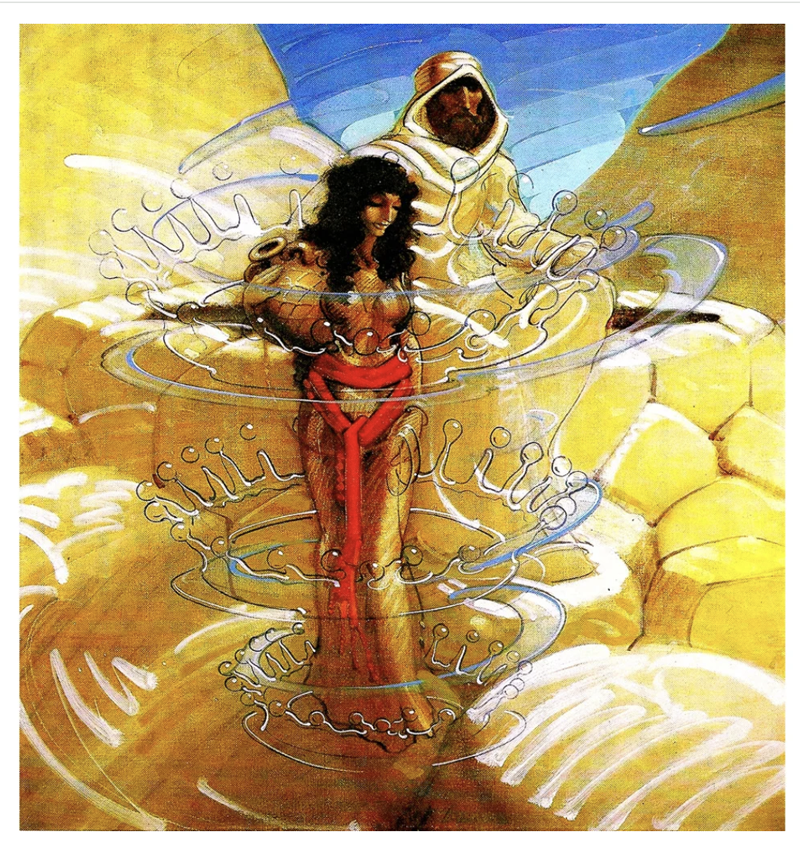
Over the next few years, Griffin produced hundreds of drawings, graphic designs for Maranatha, and more album covers. In 1988, a fire destroyed their home across the street from Calvary Chapel.
Then his life took a terrible turn. “Well, unfortunately, Rick being with influenced by the music business, a friend of his started giving Rick cocaine,” Ida recalled. “And that turned out really bad. He was verbally abusive with me, and we had four children. So I ended up leaving Rick and went up to Santa Cruz, because my parents and sister lived in Santa Cruz.”
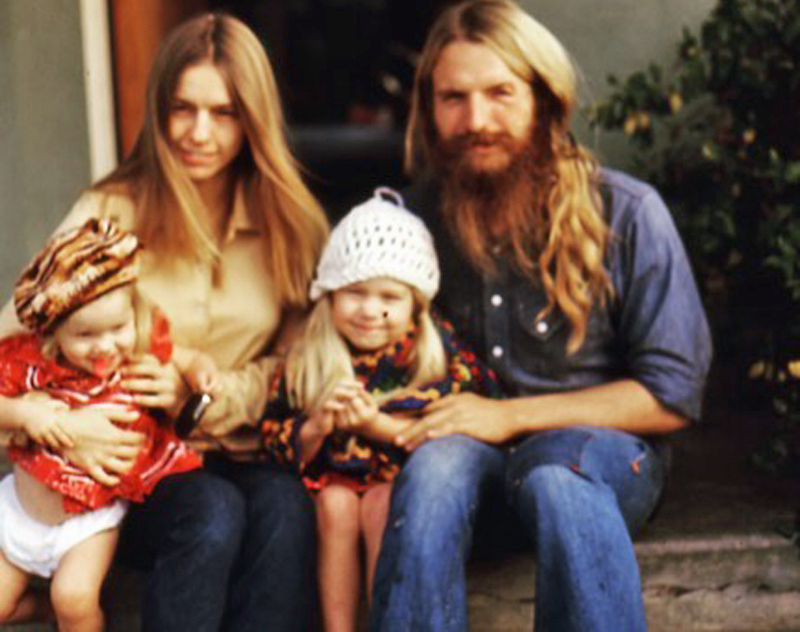
The couple were separated nine months. “Rick wanted to get back together, and we moved back home in Santa Ana. I still had problems with Rick because of the cocaine. He hid it from me, but I knew something was wrong because he would be in his studio, which was in one of the bedrooms in the house, and not come out for a couple of days, and he was abusive. That’s why I left.”
Ida and the children moved back to Santa Cruz. “Rick came up to visit me, but I was just not ready. I couldn’t trust him after dealing with the drug problem, and at that time, nobody talked publicly about the problems that cocaine caused.”
They were separated for two years, then another accident happened more serious than Rick’s brush with death years earlier. “Rick had a motorcycle, which was the dumbest thing for him to have, because he used to drive like he was surfing, which was really dangerous. He’d swerve corners.
“He was on his motorcycle, and there was a truck in front of him. Rick was trying to pass the truck on the left side of the road, just a small road, and the truck turned left at the same time and hit Rick. So Rick went flying off the motorcycle, (with) no helmet. He ended up hitting his head on the curb when he landed.
“He was taken to a hospital in Santa Rosa. He had brain damage…he only lasted like three days, and then he passed away.” He was 47 years old.
It was a heartbreaking time for Ida, losing Rick and knowing their children would grow up without their father. Rick was living with a girlfriend at the time of his death, and Ida had to engage in a lengthy legal battle to regain custody of Rick’s artwork.
His artistic trajectory was like a flaming comet that burned brightly for a time, then was consumed in the darkness of the night sky. He joined a long list of Bible figures who did not finish well, including King Saul, Samson, Solomon, Gideon, and Hezekiah. Modern examples include Lonnie Frisbee – the great evangelist of the Jesus Movement – and too many contemporary Christian leaders to list.
We have this treasure in jars of clay, to show that the surpassing power belongs to God and not to us. (2 Corinthians 4:7)
If you want to know more about a personal relationship with God, go here
To learn more about Rick Griffin’s art, go here
Paul Johnson’s surf music can be found here
¹ Doug Harvey, HEART AND TORCH: Rick Griffin’s Transcendence (Laguna Art Museum in association with Gingko Press Inc., 2007), 10.
² Harvey, HEART AND TORCH: Rick Griffin’s Transcendence, 63.
³ Harvey, HEART AND TORCH: Rick Griffin’s Transcendence, 70.