By Rusty Wright –
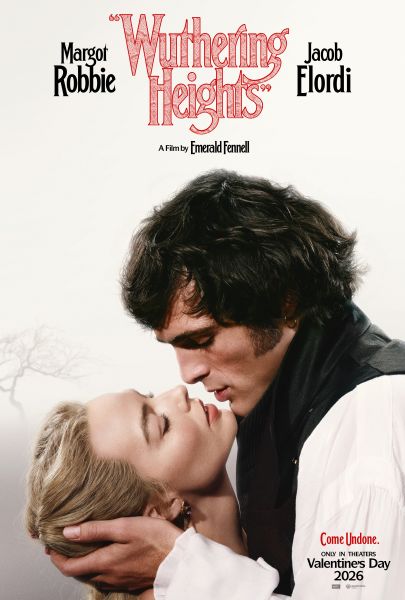
Emily Brontë’s classic novel has become a movie once again. Warner Bros.’ Wuthering Heights film depicts the passion, raw emotion, conflict, rage, and love of the famous 18th-century story cast in England’s Yorkshire moors.
Margot Robbie (Barbie) and Jacob Elordi (Priscilla) star in the lead roles.
Childhood soulmates
Young Catherine Earnshaw and her brother Hindley find themselves with a new foster brother when their father brings home Heathcliff, a poor street orphan. Catherine and Heathcliff play together regularly, exploring the countryside and becoming close friends, even soulmates. Hindly frequently criticizes and belittles Heathcliff, who consequently hates Hindly. Anger sometimes creeps into Catherine and Heathcliff’s friendship, but they genuinely care for each other.
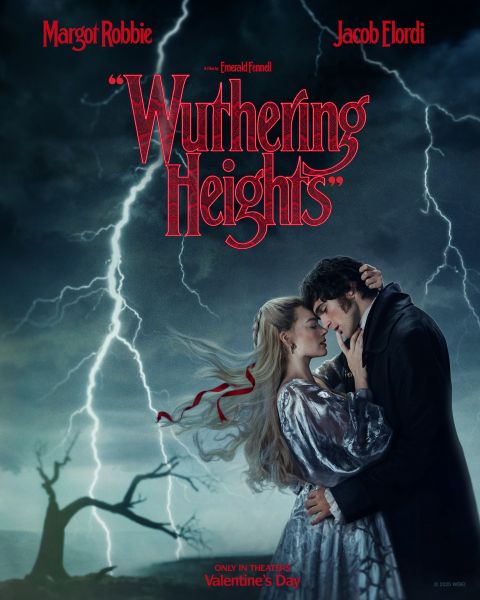
Eventually, Catherine begins seeing her wealthier neighbor, Edgar Linton, and marries him, discouraging Heathcliff, who leaves and returns three years later as a wealthy man. He still hates Hindley and Edgar (who also had debased him), and dislikes Catherine’s rejection. But the two childhood companions still have feelings for one another, and as adults the desire rekindles, sparking much of the passion in the film.
They both must deal with conflicting emotions, major themes in the story. Catherine at times dislikes Heathcliff, but ultimately loves him “because he’s more myself than I am. Whatever our souls are made of, his and mine are the same.” Heathcliff feels disappointment toward Catherine but also deep love. Though married to Edgar’s sister Isabella, Heathcliffe lets his love for Catherine dominate and pursues her again.
Family Feud
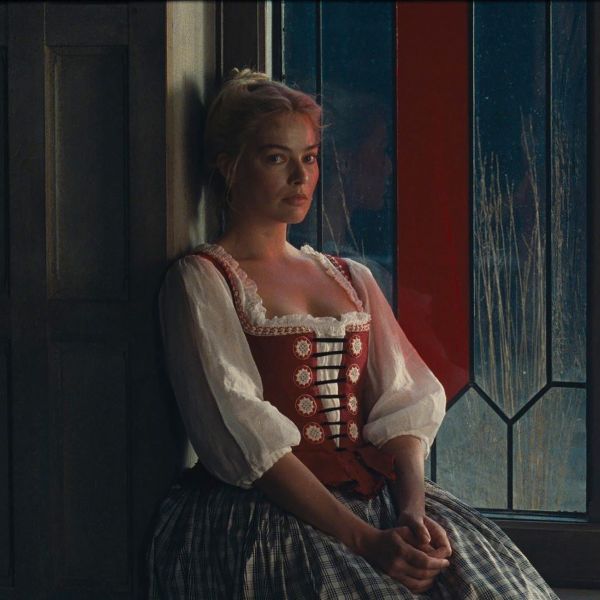
Copyright: © 2026 Warner Bros. Ent. All Rights Reserved.
Photo Courtesy Warner Bros. Pictures.
Seem like a complex plot? With complicated emotions and family relationships? You’d be correct. Think Family Feud meets Hatfields & McCoys meets Romeo and Juliet. Two longtime lovers marry siblings, and have their own kids. Eventually cousins start getting involved romantically, marrying each other. Sometimes you can’t tell the players without a scorecard.
Thankfully for film audience comprehension, the movie ends before the novel’s cousins’ romances begin. Maybe the screenwriters agreed with me that the story can become too hard to follow at some point. Reading the novel, I wished it had included family tree diagrams so I could keep the relationships straight.
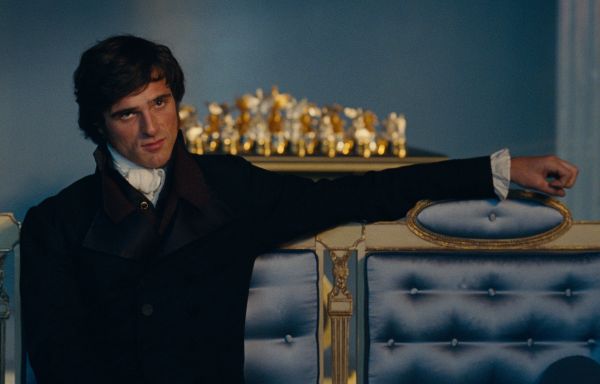
Copyright: © 2026 Warner Bros. Ent. All Rights Reserved.
Photo Courtesy Warner Bros. Pictures.
Wait, you mean Edgar’s and Catherine’s daughter is named Cathy, and at various times she falls for Heathcliffe’s son and later for her other uncle’s son, and eventually – at different times – marries both? Whew!
Judgementalism, forgiveness
Notably, biblical themes reminiscent of British culture in Brontë’s era are sprinkled throughout the story. (The book was published in 1847. She died the following year at age 30.)
Copyright: © 2026 Warner Bros. Ent. All Rights Reserved.
Photo Courtesy Warner Bros. Pictures.
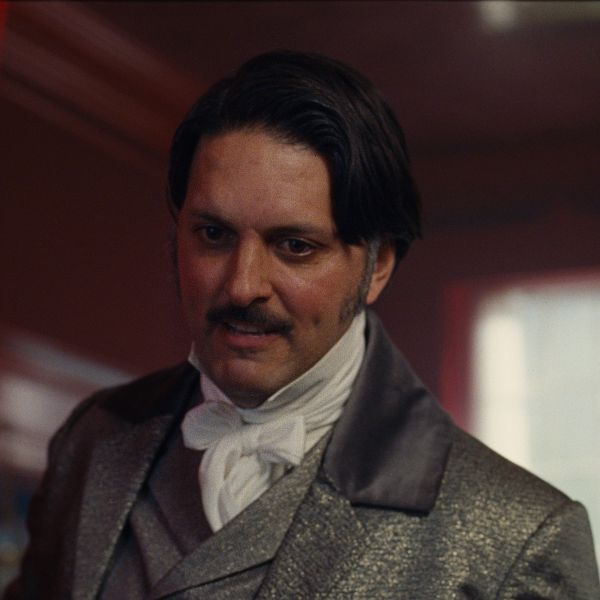
It’s clear that Brontë does not take kindly to religious judgementalism and self-righteousness. Joseph, an elderly household servant, often quotes the Bible and criticizes behavior he considers wrong. The author describes Joseph as “the wearisomest self-righteous Pharisee that ever ransacked a Bible to rake the promises to himself and fling the curses to his neighbours.”
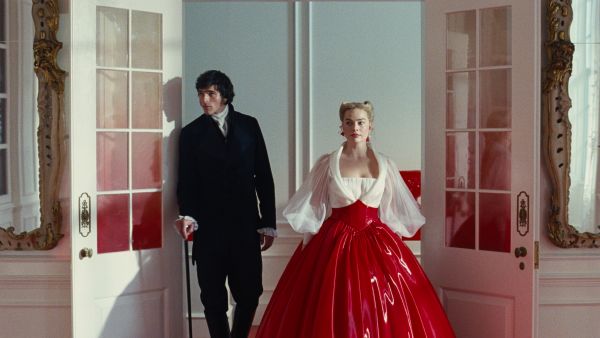
Rather, Brontë favors love and forgiveness. Heathcliff makes clear his desire to inflict revenge on Catherine’s brother Hindley for his taunting and criticisms. Nelly, the housekeeper, scolds him: “For shame, Heathcliff! … It is for God to punish wicked people; we should learn to forgive.”
Revenge or love?
Copyright: © 2026 Warner Bros. Ent. All Rights Reserved.
Photo Courtesy Warner Bros. Pictures.
Forsaking revenge is a virtue that eludes Heathcliff, until…. Well, you’d have to read the novel’s end to discover that. But it’s nice to see him abandon revenge over his enemies in his old age, albeit not from magnanimity but because revenge has lost its pleasure. His decision falls far short of a famous teacher’s admonition to “love your enemies! Do good to those who hate you. Bless those who curse you. Pray for those who hurt you.” But it is significant.
 Emily Brontë clearly sought in her novel to encourage love and forgiveness amid human rage and revenge. Her novel accomplishes that, and WB’s movie gets viewers thinking in that direction, amid its many distractions. Producers call their R-rated adaptation “a bold and original imagining of” the classic “epic tale of lust, love and madness.” Brontë might have blushed at some scenes. But a love and forgiveness message does come through in the film, and could have been even stronger.
Rated R (USA) “for sexual content, some violent content and language.”
Opens February 13 (USA); Internationally (6 continents) February 11 ff.
Rusty Wright is an author and lecturer who has spoken on six continents. He holds Bachelor of Science (psychology) and Master of Theology degrees from Duke and Oxford universities, respectively. www.RustyWright.com
Copyright © 2026 Rusty Wright
# # #
Editors: High res images available here, here, here, here, here, here, here, here, and here. You are welcome to republish this article with author- and source-website attribution (i.e., please link back to this website).