By Mark Ellis —
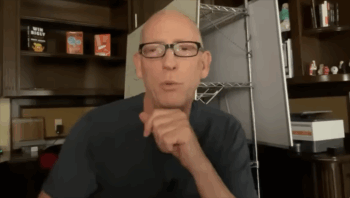
Scott Adams, the acclaimed cartoonist whose “Dilbert” comic strip brought amusement to many with his satirical treatment of office life, passed into eternity following a courageous battle with prostate cancer. He was 68.
Adams died January 13th at his home in Pleasanton, California, according to his former wife, Shelly Miles, during a livestream on his “Real Coffee with Scott Adams” podcast. In a poignant moment, Miles read a final message Adams had prepared on January 1st, reflecting on his life, career, and a newfound search for meaning amid his illness.
“Many of my Christian friends have asked me to find Jesus before I go,” he wrote. “I’m not a Believer, but I have to admit the risk-reward calculation for doing so looks attractive. So, here I go: I accept Jesus Christ as my Lord and Savior, and I look forward to spending an eternity with Him. The part about me not being a believer should be quickly resolved if I wake up in heaven. I won’t need any more convincing than that. And I hope I am still qualified for entry.”
Born in 1957 in Windham, New York, Adams rose to fame with “Dilbert,” which debuted in 1989 and quickly became a cultural delight to many, syndicated in thousands of newspapers worldwide. His sharp wit captured the frustrations of white-collar workers, spawning books, an animated TV series, and a devoted following.
In 2023, Dilbert was dropped by numerous newspapers and its distributor, Andrews McMeel Syndication, after accusations that Adams made racist comments on his “Real Coffee” YouTube channel, which he defended as exaggeration.
He continued engaging audiences through podcasts, books on success and persuasion, and social media.
Adams first revealed his prostate cancer diagnosis in May 2025, describing it as an “every day nightmare” that had metastasized to his bones, according to NBC News. Despite aggressive treatments, the disease progressed, prompting deep introspection in his final months.
Adams’ statement about accepting Jesus is remarkable, after years of exploring hypnosis, self-help, and his stated agnostic views. According to a close associate quoted in People magazine, Adams had been reading the Bible and discussing faith with a local pastor during his illness. “Scott always sought truth through logic and evidence,” the source said. “But in his pain, he found the ultimate Truth in Jesus, who offers forgiveness and eternal life.”
Though Adams leaves behind a legacy of laughter and insight, his 11th hour declaration of faith in Christ offers the greatest hope: that in his final moments, the Savior’s grace transformed whatever doubts still remained.