
 By Riley Gonzalez —
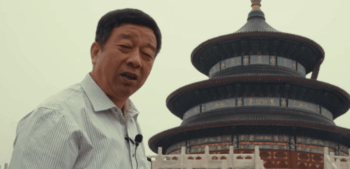
Pastor Zhang Rongliang in China says that the Beijing ancient Temple of Heaven actually was dedicated to the Jewish/Christian God Shaddai of the Bible.
“At the Temple of Heaven, Heaven here refers to China’s highest ruler, meaning China’s God,” Rongliang says on Radical, per translation. “This is the very place that emperors would come to pray. This was their place of worship. Many have observed this place and find that it resembles the temple of the Bible.”
As the church in China explodes in growth, Chinese Christian leaders say that the bedrock faith in China is NOT Buddhism, NOT Confucianism, NOT Daoism and certainly NOT Atheism. They say it is Christianity, which gives precedent to the blessing of God being poured out over the nation currently.
 Scholars believe the temple was constructed during 1406-1420 during the Ming Dynasty, well after Nestorian Christianity was established in China. Located in southeastern central Beijing, the temple stands out for its lack of idols, adhering to the Bible in this regard.
It is dedicated to Shang Di, which Christians note sounds eerily similar to Shaddai, which means God Almighty in Hebrew.
“The similarities to Old Testament worship are undeniable,” says Eugene Bach, who hosts the Back to Jerusalem podcast. “The sacrifices they did here looked like the sacrifices they did in the Old Testament.”
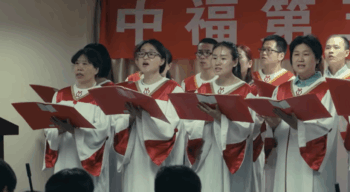 “We can see that China is a land that worships God (historically),” Rongliang says. “I want to remind all Chinese people that we are actually from a land that worships God. Our original culture is from God. The God of Heaven is the true ruler and authority.”
The longer name of the god of this temple is Huang Tian Shang Di, which means Emperor of Heaven Most High Ruler.
Current revival is a sign that the Chinese are turning to their true roots, says Rongliang, who released from jail for being a Christian in the 1980s planted a church in Fangcheng. “The people’s hearts were ready,” he says. “We had no idea what we were doing. A bunch of us felt we had the calling, but we were homeless. We left everything and joined together: meeting, sending, breaking breading, sharing everything, in study and in prayer, in worship and in weeping.”

A church network was born and became the one he presides “Chinese for Christ,” the largest in China. He was arrested again by the communists, who oppose Christianity. Police interrogated him: “How did you form a whole network?”
“I formed a network with the help of the police,” he replied.
“You lie!” was their outraged response. “We would never help the church.”
“All the times you were chasing after us, our church growth exploded,” he explained. “But the times when you stopped arresting us, then the church growth slowed down. In hindsight, I feel like you helped plant the church.”
Pastor Shen XiaoMing, who leads a fellowship estimated at 10 million believers, agrees: “We suffered for years. We were tested and tried. Persecution didn’t destroy us. It refined the church. It caused us to grow. The church shouldn’t fear suffering; it should fear worldliness.”
In 1994 when China loosened its grip on society, some Christians entered and Rongliang could coordinate with the church from abroad.
Several thousand Chinese come to Christ every day, Bach says.
“Our hope is that all Chinese would return to the Lord,” Rongliang says.
This article first appeared on Pilgrim Dispatch. Used with permission.



[…] You can read the rest of this story by clicking HERE […]
Comments are closed.