By Mark Ellis —
In an era when family legacies are often measured by wealth or fame, a century-old study reminds us of the value of a godly, faith-filled heritage. The stark contrast between the descendants of Jonathan Edwards, a devoted preacher and theologian in the early American colonies, and Max Jukes, a man who rejected God’s ways, illustrates the profound impact of one life on generations to come.
Jonathan Edwards (1703-1758) was a giant of the faith, one of the great theological minds of his generation or any generation, and a key figure in America’s Great Awakening. Edwards pastored churches in Northampton and Stockbridge, Massachusetts, later serving as president of the College of New Jersey (now Princeton University).
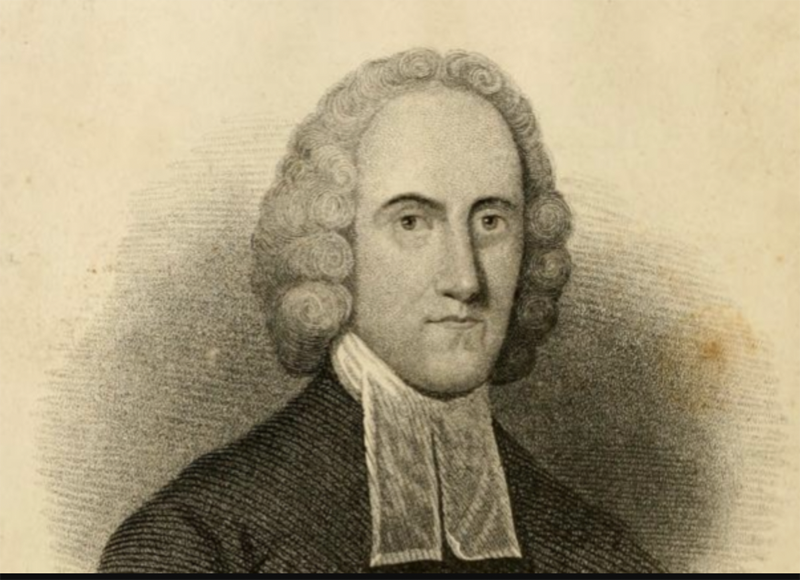
His sermon, “Sinners in the Hands of an Angry God,” was a catalytic message delivered during the First Great Awakening, emphasizing God’s sovereignty and the need for personal repentance.
Married to Sarah Pierpont, a devoted believer, Edwards raised 11 children in a home filled with prayer, Bible-reading, and firm discipline.
In 1900, American educator A.E. Winship traced Edwards’ descendants over five generations, uncovering a remarkable pattern of blessing. Among 1,394 traced relatives were one U.S. Vice President, three U.S. Senators, three governors, three mayors, 13 college presidents, 65 professors, 100 lawyers, 30 judges, 60 doctors, 75 military officers, 80 public office holders, 100 clergymen, and 285 college graduates.
Edwards’ legacy produced leaders who shaped America’s moral and intellectual landscape, from universities to courtrooms. “The Edwards family is a testimony to God’s faithfulness when we prioritize Him,” noted historian George Marsden in his biography Jonathan Edwards: A Life (Yale University Press, 2003).
In an 1877 sociological study, Richard L. Dugdale traced the lineage of Max Jukes, a pseudonym for a real individual, born around 1720 in New York. Described as a jovial but idle man who rejected education, religion, and steady work, he lived in a remote shanty and fathered a family marked by poverty, crime, and social dysfunction.
Dugdale traced 1,200 descendants over five generations, finding seven murderers, 60 thieves, 150 convicts, 190 prostitutes, 310 indigents, 440 alcoholics, and 300 premature deaths, costing New York State $1.25 million in legal and welfare expenses ($30 million in inflation-adjusted dollars).
The contrast between Edwards and Jukes was popularized in A.E. Winship’s 1900 study Jukes-Edwards: A Study in Education and Heredity, which emphasized the so-called “five-generation rule” of parental influence.
The “Jukes” and a fictional individual named Jacob Jukes were not linked to mocking Jonathan Edwards and the Great Awakening; this appears to be a later embellishment in Christian literature to further highlight and dramatize the difference between the two families.
Winship’s study, (available on Project Gutenberg), was more than mere statistics. It was a moral wake-up call, demonstrating how one man’s rejection of God’s principles led to generational ruin, while another’s devotion yielded remarkable fruit.
“Edwards’ faith planted seeds that bloomed for centuries,” Winship wrote, attributing the difference to education, environment, and spiritual heritage.
The Edwards-Jukes contrast demonstrated the profound influence parents wield over their family for generations to come. Edwards’ daily prayers and Bible teaching equipped his children to impact society positively, while Jukes’ neglect perpetuated cycles of poverty and crime.
In a time when the Christian model for family life is under attack, investing in our children and grandchildren’s spiritual growth—through prayer, Bible reading, and godly example—can build a legacy of blessing.
As Edwards himself preached, “God is glorified in the work of redemption,” and that redemption extends to our families.
Let us be inspired by Edwards’ example, committing our homes to Christ, that future generations might say, as in Psalm 100:5, “The Lord is good and his love endures forever; his faithfulness continues through all generations.”